
We Buy
Antiques & Collectables
From Cape Dutch furniture and Persian carpets to Masonic regalia and mining relics — a broad category with deep South African roots.
What Makes Antiques & Collectables Collectible
Antiques and collectables cover a broad sweep of everyday and specialist objects — from clocks and furniture to militaria, kitchenware, and fraternal regalia — that have outlived their original era to become records of design, craftsmanship, and social history. Value in this category is rarely about age alone; it depends on maker attribution, originality, condition, rarity, and, often, provenance tied to a specific place or period. South Africa's own colonial, mining, and military history gives many of these items — from Witwatersrand-era mining tools to Masonic lodge regalia and Anglo-Boer War postal history — an added layer of local significance for South African sellers and collectors.
Makers & Items We Buy
Antique Mining Equipment
This category covers the tools of the prospecting and mining trade — carbide and oil-wick safety lamps, surveying instruments, assay scales and crucibles, gold pans, ore specimens, and blasting or drilling hardware. Most surviving pieces date from the late 19th century through the early-to-mid 20th century, when carbide lamps (burning a gas produced by calcium carbide and water) replaced candles and oil-wick lamps as the standard underground light source. This category has strong South African relevance: the 1886 Witwatersrand gold discovery (credited to George Harrison at Langlaagte) founded Johannesburg and the modern SA mining industry, while the 1871 Kimberley diamond rush at Colesberg Kopje built the fortunes of Cecil Rhodes and Barney Barnato and gave rise to De Beers — items with genuine provenance to Rand mines or Kimberley diggings carry particular local historical weight. We value pieces for legible maker's marks (e.g. Justrite, Baldwin, Thomas & Williams), original condition and completeness, and rarity of related paper ephemera such as mine share certificates or claim licences.
Antique Telephones
Telephone design moved through distinct eras that collectors track closely: upright "candlestick" desk phones (popular from the 1890s to the 1920s, especially early nickel-plated models), wall-mounted magneto/crank phones used with manual exchanges before automatic dialling spread, and moulded Bakelite phones of the 1920s-1930s, whose durable, decorative plastic casing (pioneered in Scandinavia by Ericsson and its partners) replaced heavier all-metal designs. The most sought pieces come from recognised manufacturers such as Western Electric, Ericsson, Siemens, and the British GPO, with value driven by originality of components, working mechanisms, and untouched finish. South Africa has its own relevant telecoms history worth noting: the country's first telegraph line linked Cape Town and Simon's Town in 1860, Port Elizabeth is credited with hosting South Africa's first telephone exchange, and telephone services were run by the state until 1991, when Telkom was split out as the dedicated telecommunications operator — meaning older crank and Bakelite phones found locally often trace back to this state-run exchange system.
Carriage Clocks
Carriage clocks (French: pendule de voyage) are small, portable spring-driven timepieces. The style originated with the officer's travelling clock (pendule d'officier) developed for Napoleon by the celebrated French clockmaker Abraham-Louis Breguet in the late 18th century, and production expanded rapidly through the 19th century, peaking in output around the 1860s, predominantly from French workshops. They are spring-driven with a distinctive platform escapement usually visible through a glazed panel on top of the case, and cases evolved through recognisable styles — the S-curved "gorge" case of the 1850s, the rectangular "Anglaise" case with carrying handle, and bamboo/Japonisme cases influenced by Oriental design from the 1870s. Collectibility hinges on a legible maker's mark (top names include Pierre & Alfred Drocourt and Henri Jacot, identifiable by his parrot logo), added complications such as repeaters, alarms, or calendars, quality of the gilt-brass or porcelain-panelled case, and presence of the original fitted travelling box.
Chippendale Furniture
Chippendale furniture takes its name from Thomas Chippendale (1718-1779), London's foremost 18th-century cabinetmaker, whose 1754 pattern book The Gentleman and Cabinet-Maker's Director became the reference style-guide for English and colonial furniture makers for decades afterward. True period pieces date from roughly the 1750s to 1780s and blend three main design influences — Rococo, Gothic Revival, and Chinese (Chinoiserie) — expressed through mahogany construction, cabriole or Marlborough legs, ball-and-claw feet, pierced chair splats, yoke-shaped top rails, and elaborate carved shells and acanthus leaves. Because Chippendale himself signed almost nothing, genuine attribution to his own workshop is rare and commands very high prices, while most surviving "Chippendale" furniture is later work in his style by other cabinetmakers or by Victorian/Edwardian and 20th-century revivalists; distinguishing these via hand-cut joinery, timber choice, wear patterns, and construction technique is central to valuation. Notably, 18th- and 19th-century Cape colonial cabinetmakers produced their own Georgian-influenced furniture using local stinkwood and yellowwood, adapting English forms for the Cape market — such pieces are collected in South Africa as "Cape furniture" but reflect the same design lineage.
Corningware
CorningWare was launched in 1958 by Corning Glass Works, built around Pyroceram, a white glass-ceramic developed by scientist S. Donald Stookey that could go straight from freezer or stovetop into a hot oven without cracking — a genuine innovation in mid-century cookware. The famous Blue Cornflower pattern debuted alongside the product that same year and remained in production until 1988, becoming the design most associated with the brand, though other patterns such as Spice O'Life, Wildflower, and French White followed over the decades. Vintage pieces from the 1950s-1970s are the most sought after, particularly early Cornflower casseroles with the sloped-sided "P" mould shapes and smaller handles, which predate the more common rounded 1980s versions and can fetch four-figure sums for rare forms. We value pieces by pattern rarity, mould shape, maker's marks, and completeness of original lids.
Late Georgian & Regency Furniture
Late Georgian and Regency furniture spans roughly the 1790s to 1830s, bridging the final decades of Georgian England and the Regency proper (named for the Prince Regent, later George IV, who governed from 1811). The style is defined by neoclassical restraint giving way to greater exuberance: the slender, tapered legs and refined proportions associated with designers George Hepplewhite and Thomas Sheraton evolved into the bolder, more architectural Regency look, favouring rich mahogany and dark, brass-inlaid rosewood over heavy carving, letting fine veneers, ormolu mounts, and exotic timbers like satinwood carry the decoration. Motifs of the period reflect fashionable fascinations with antiquity and the exotic — Greek key patterns, acanthus leaves, Egyptian-influenced forms, and chinoiserie detailing all appear on cabinets, chairs, and tables of the era. We prize pieces with strong original patina, well-figured veneers, brass inlay in good condition, and secure attribution to the Hepplewhite/Sheraton design tradition or documented Regency workshops.
Lilliput Miniatures
"Lilliput Lane" is the correct name of the British collectible brand behind the small, highly detailed resin/ceramic-composite miniature cottages, thatched houses, and iconic buildings often loosely called "Lilliput miniatures." It was founded in September 1982 by sculptor David Tate in Skirsgill, near Penrith in England's Lake District, starting with just seven staff and an initial range of 14 models depicting quintessentially British architecture. The brand grew into a major collectibles phenomenon — acquired by Enesco in 1997, with a collectors' club that at its peak had over 50,000 members worldwide — before production ceased in 2016 following the closure of its Langholm factory. Collectible value today centres on early pieces, retired models, and especially limited "Rare Pieces" editions produced in small runs, with condition, original box/certificate, and edition size the key value drivers.
Masonic Items
Masonic regalia — aprons, jewels, sashes, medals, and ceremonial tools — traces back to the working aprons and tools of operative stonemasons, which took on symbolic meaning as Freemasonry evolved into a speculative fraternal order through the 17th and 18th centuries; the earliest surviving jewels and decorated aprons date to the 1700s. Classic items include the white lambskin apron given to Entered Apprentices, officers' jewels shaped as the square, compasses, and level, collars, and commemorative medals awarded for service or milestones, with hand-embroidered 18th- and 19th-century aprons and rare officers' jewels the most sought after. South Africa has particularly deep Masonic roots relevant to our local collector base: Freemasonry arrived at the Cape in 1772 under the Grand Orient of the Netherlands, founding Lodge de Goede Hoop in Cape Town — still standing as a national monument — and the order spread with colonial and mining expansion, establishing lodges in Kimberley (from 1889) and Johannesburg (1895). South African Masonic regalia, lodge medals, and jewels — especially pieces linked to early Cape, Kimberley, or Johannesburg lodges — carry added local historical significance and collector interest.
Nurse's Fob Watch
The nurse's fob (or pendant) watch descends from the Victorian pocket watch, adapted for clinical use when nurses began pinning it upside-down to the breast of their uniform so the dial could be read hands-free while taking a patient's pulse — a practice that also kept the watch off surfaces for hygiene. Most surviving examples date from the late Victorian era through the mid-20th century, typically in sterling silver or chrome cases with white enamel dials, some featuring a printed pulsometer scale around the rim for counting heartbeats. Collectible value hinges on the maker (signed examples by established watch houses command a premium), hallmark date letters and assay marks, quality of enamelling, and features like luminous hands and numerals. In South Africa, formal nursing training began with Sister Henrietta Stockdale's Kimberley school from 1877, and the fob watch remains an official, SANC-mandated part of the nurse's uniform to this day — giving locally-owned vintage examples an added layer of regional professional history.
Persian Carpets
Persian (Iranian) hand-knotted carpet weaving is one of the world's oldest textile traditions, tracing back over two millennia and reaching its artistic peak under the Safavid court workshops of 16th-century Isfahan; the craft has since flourished in named regional centres such as Tabriz, Isfahan, Kashan, Qum, Heriz and Nain, each recognised for a distinct knot structure, palette and motif style. Value is driven chiefly by knot density (fine silk Qum or Nain pieces can exceed a million knots per square metre versus coarser village weaves like Heriz), age and condition, and whether dyes are natural/vegetable versus synthetic, along with documented provenance. South Africa has a long-established Persian and Oriental carpet trade: Johannesburg auction houses regularly catalogue Persian rug lots, and older Persian carpets remain a recurring fixture in South African deceased-estate and antique auctions. We look for tightly woven foundations, minimal wear to the pile, and colour consistency as the clearest signs of an heirloom-quality piece worth a specialist valuation.
Postage Stamps (Late 1800s & Early 1900s)
The late-19th and early-20th centuries are the classic era of South African philately, anchored by the Cape of Good Hope's distinctive triangular stamps issued from 1853 — the world's only triangular postage stamps at the time — with the rare unused 4d black among the most valuable stamps in existence. The Anglo-Boer War (1899-1902) produced a wealth of collectible overprints as postal stocks ran short, including the Transvaal and Orange Free State's "V.R.I." and "E.R.I." Crown Colony surcharges and the famous Mafeking siege issues, hand-overprinted during Baden-Powell's 217-day siege. Following Union in 1910, the four former colonies' stamps remained valid together during the "Interprovincial" period (1910-1913), a widely collected transitional issue. Value across all these issues is driven by rarity, genuine printing/overprint errors or varieties, centering and gum/condition grade, and postal history context — with forgeries (notably of the Mafeking overprints) a recognised risk we watch for.
Service Watches
Military-issue wristwatches emerged from WWI, when officers adopted the "wristlet" for hands-free timekeeping in the trenches; genuine military-issue examples are identifiable by an army stores reference number and the British "broad arrow" or pheon stamped on the case back, denoting Crown property. The category reached its best-known form in WWII with Britain's W.W.W. ("Watch, Wristlet, Waterproof") specification, fulfilled between 1944-45 by twelve Swiss manufacturers now nicknamed the "Dirty Dozen" (including Omega, Longines, IWC and Jaeger-LeCoultre), each dial marked with the broad arrow beneath the maker's name. Collectibility depends on an untouched, matching original dial and hands, legible broad-arrow and issue-number engravings on the case back, and correct maker's movement. South Africa's Union Defence Force served in both world wars, and while UDF personnel carried period-typical British and Swiss-made service watches of exactly this kind, any South African connection is generally through service history and provenance rather than a unique local watch model.
Antiques & Collectables Currently For Sale
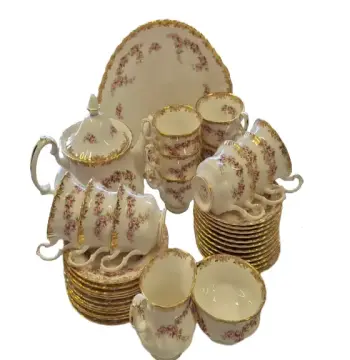
Royal Albert Dimity Rose Fine Bone China 12 Person Tea Set
R9,500.00
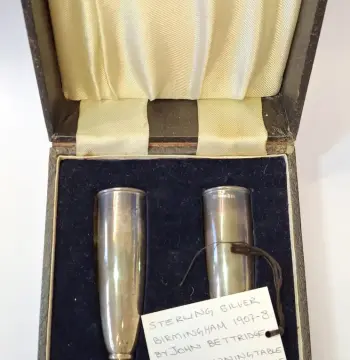
Antique Edwardian Sterling Silver Bud Vases by John Bettridge – Birmingham 1907 (Cased Pair)
R5,000.00
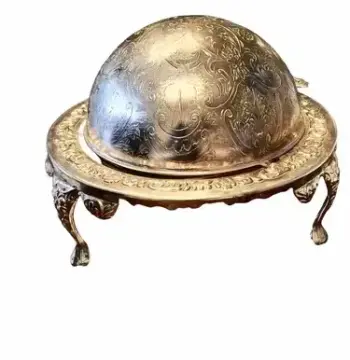
Vintage Roll-Top Butter & Caviar Dish – Silver-Plated Revolving Dome Server
R1,700.00
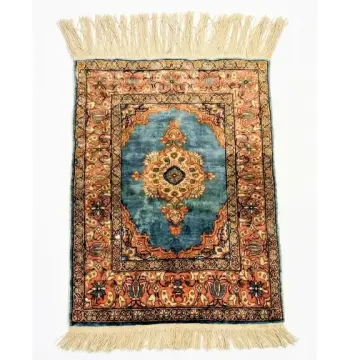
Vintage-Style Miniature Persian Style Medallion Accent Mat
R600.00
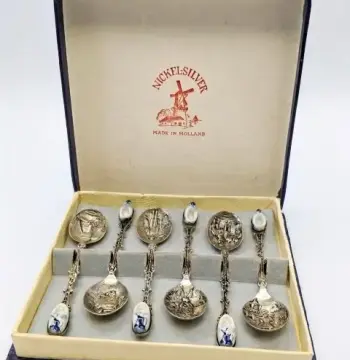
Vintage Dutch Nickel‑Silver Souvenir Spoon Set with Delft Inserts (6‑Piece, Boxed)
R250.00
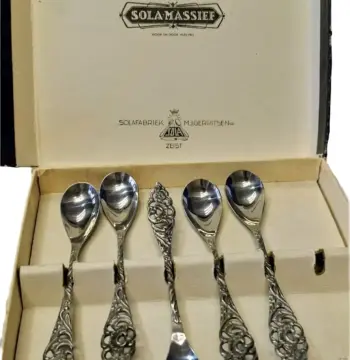
Vintage Dutch Sola Massief Silverplated Filigree Spoons
R100.00
Get an Instant, No-Obligation Offer
Send us photos via WhatsApp or book a home visit — our specialists travel to you anywhere in South Africa.