We Buy
Coins & Bank Notes
ZAR Kruger coinage, Rhodesian and East African issues, world coins, and everything in between.
What Makes Coins & Bank Notes Collectible
Southern Africa's numismatic history is unusually rich, shaped by successive colonial administrations, mining booms, and the transition from imperial to independent currencies. From Kruger-era Transvaal coinage and the East African rupee to Rhodesian pounds and dollars, the region produced a dense sequence of short-lived currencies as territories changed hands, decimalised, or gained independence, leaving collectors a deep well of historically significant pieces. Condition, mintage figures, and the political story behind each issue all drive collectability and value in this field.
Makers & Items We Buy
British & German East Africa Coins & Bank Notes
Before 1920, the East African coast used two competing colonial currencies: the German East African rupie, introduced in 1890 by the German East Africa Company and pegged to the Indian/Zanzibar rupee before being tied to the Mark in 1904, and the British East African rupee (1906-1920), which included the world's first aluminium coin, the 1907 one-cent piece. Wartime necessity produced some of the most sought-after issues, notably the 1916 German 15-Rupien gold coin struck from Sekenke mine gold to pay Schutztruppe soldiers during the East African campaign. In 1920-21 both currencies were superseded first by the East African florin and then the East African shilling, making earlier rupie and rupee issues comparatively scarce survivors of a brief colonial monetary era. We prize well-preserved German East Africa pieces and wartime emergency issues especially highly, given their low mintages and turbulent history.
Foreign currency
This category covers international coins and banknotes outside the African colonial and world-coin mainstream — currencies acquired through trade, travel, immigration, or estate collections that don't fit a single regional theme. Value is driven by rarity, condition, historical significance (obsolete or superseded currencies, war issues, hyperinflation notes), and demand among specialist collectors of a given country or era. Foreign currency often arrives via deceased estates or collectors who accumulated pieces from travel or trade links, making provenance and completeness of a set important value factors. Genuinely scarce foreign issues, key dates, and notes from politically significant periods command the strongest premiums.
Old S.A Coins & Bank Notes
South African coinage traces from the Zuid-Afrikaansche Republiek (ZAR) issues of the 1890s under President Paul Kruger — including the famous gold and silver "Kruger" coinage first struck in 1892 — through to the Union of South Africa's own coinage, minted at the Royal Mint, Pretoria from 1923. The rarest and most celebrated piece in the series is the 1902 gold Veld Pond, hand-struck by Boer forces at a makeshift mint in Pilgrim's Rest using improvised dies during the Anglo-Boer War, of which fewer than 1,000 were produced. South Africa decimalised in 1961 with the introduction of the rand, replacing the pound, so pre-1961 pound/shilling/pence coinage and early Union and ZAR banknotes are especially collectible as tangible links to the country's pre-democratic monetary history. Condition, mint marks, and historical association are the key drivers of value.
Rhodesian Coins & Bank Notes
Rhodesian currency passed through several distinct phases: Southern Rhodesian pound coinage and notes (pre-1964, featuring the reigning British monarch), the short-lived Rhodesian pound (1964-1970) issued after Rhodesia's Unilateral Declaration of Independence, and finally the Rhodesian dollar (1970-1980), introduced at two dollars to the pound. Banknotes throughout carried Queen Elizabeth II's portrait even after UDI, making them politically distinctive artefacts of a breakaway state operating under international sanctions. Because Rhodesia's currencies existed for relatively short, politically charged periods before being replaced by the Zimbabwean dollar at par in 1980, well-preserved coins and notes from this era are keenly collected both for their numismatic rarity and their connection to a pivotal period of African decolonisation history.
World Coins
World coin collecting spans currencies from every era and continent, appealing to collectors interested in a particular country, monarch, historical period, or design theme rather than a single regional focus. Value depends heavily on metal content, mintage numbers, condition/grade, and historical importance — coins tied to major empires, transitional currencies, or short-lived states tend to attract the most interest. World coins typically arrive through estates, deceased collections, or travellers, offering an entry point into global numismatics alongside our African specialities. Cross-collecting demand — British Empire or Commonwealth issues that overlap with South African colonial history, for example — often adds extra local relevance and value.
Collectable Gold & Silver coins
Gold and silver coins are collected both for their precious-metal content and their numismatic premium, with South Africa's own Krugerrand — first minted in 1967 to help market the country's gold — being the most globally significant example, having once accounted for roughly 90% of the world gold coin market. Older gold and silver issues, such as ZAR Kruger ponds, sovereigns struck at the Pretoria mint, and pre-decimal silver coinage, carry additional collector value beyond bullion price due to rarity, historical significance, and condition. Proof and limited-edition strikes, low-mintage dates, and coins with a documented historical story command the highest premiums over spot metal value.
Coins & Bank Notes Currently For Sale
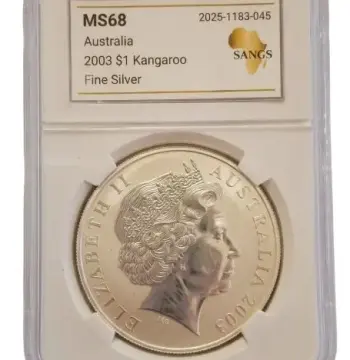
2003 Australian $1 Kangaroo Silver Coin (MS68, SANGS)
R2,899.00
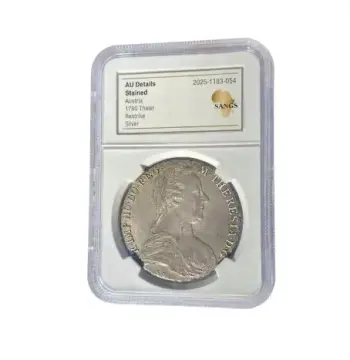
1780 Austria Maria Theresa Thaler Silver Restrike (AU Details – Stained, SANGS certified)
R2,050.00
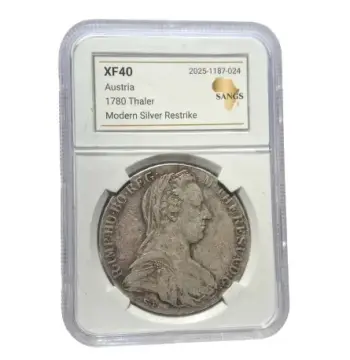
1780 Maria Theresa Thaler Silver Coin Restrike | SANGS XF40
R1,799.00
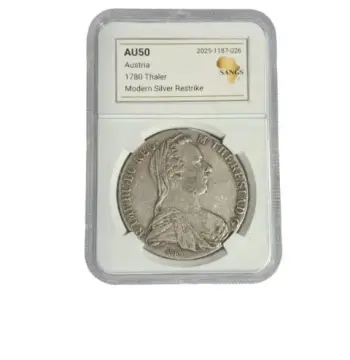
AU50 1780 Maria Theresa Thaler – Modern Silver Restrike Coin
R1,699.00
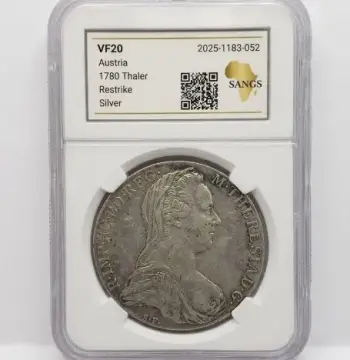
1780 Austria Maria Theresa Thaler Silver Coin VF20 | Historic Trade Currency
R1,112.00
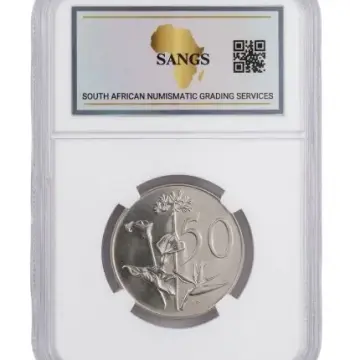
1967 South Africa 50 Cent English Proof Coin SANGS PF65 | Pure Nickel
R1,100.00
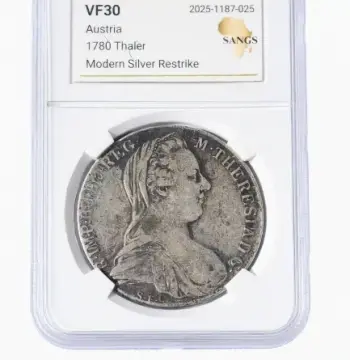
1780 Maria Theresa Thaler Restrike VF30 – Austrian Silver Trade Coin
R1,100.00
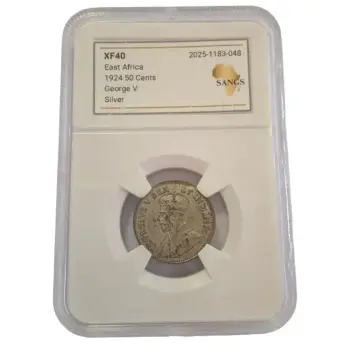
1924 East Africa 50 Cents Silver Coin XF40 | King George V Colonial Currency
R850.00
Get an Instant, No-Obligation Offer
Send us photos via WhatsApp or book a home visit — our specialists travel to you anywhere in South Africa.