We Buy
Fine Art
Pierneef, Stern, Tretchikoff, Battiss and other South African "blue chip" and regional painters — original works, prints and signed studies.
What Makes Fine Art Collectible
South African fine art has become one of the continent's strongest and most liquid collecting categories, anchored by a small group of "blue chip" 20th-century names — Irma Stern, J.H. Pierneef, Alexis Preller, Maggie Laubser, Walter Battiss and Vladimir Tretchikoff foremost among them — whose works regularly achieve seven- and eight-figure rand prices at auction. Local and international auction houses, led by Strauss & Co alongside Aspire Art and Bonhams, have driven a steady run of South African auction records in recent years. Beyond these top-tier names, well-regarded landscape, genre and religious/figurative painters continue to command healthy secondary-market demand, making early-to-mid 20th-century South African painting a comparatively accessible entry point into a market with proven long-term price appreciation.
Makers & Items We Buy
Adriaan Hendrik Boshoff Senior
Adriaan Boshoff (1935-2007) was a South African Impressionist painter born and largely self-taught in Pretoria, who left school at 14 and only committed to painting professionally around 1960. Sometimes dubbed "the Renoir of South Africa," he became known for luminous, light-filled depictions of the veld, grazing cattle and rural, pastoral scenes, alongside still lifes such as his 1966 "Nasturtiums in a Bowl." Fiercely private and self-critical, he rarely exhibited publicly, yet his paintings entered private collections across the US, UK, Australia and Europe. His market has remained consistently strong with collectors; the Adriaan Boshoff Museum opened in Pretoria in 2019 to house his archive.
Anna Vorster
Anna Vorster (1928-1990) was a South African painter born in Hartebeesfontein, Transvaal, who graduated in Fine Arts from the University of the Witwatersrand in 1952 alongside other members of the influential "Wits Group," later studying at the Slade School in London and under André Lhote in Paris. She lectured at the Johannesburg Technical College before withdrawing from academia to focus on her own painting, developing a semi-realist style distinguished by strong, articulate draughtsmanship. Her later work reflected the coastal scenery of the Cape, blending descriptive line with abstracted rhythm. She died in Pretoria in 1990; her market is smaller and more regional than the country's top blue-chip names but she remains a respected figure from the Wits-trained generation of mid-century South African modernists.
Alexis Preller
Alexis Preller (1911-1975) was a major South African modernist born and died in Pretoria, trained at the Westminster School of Art and the Académie de la Grande Chaumière in Paris. Drawing on Egyptian, ancient Greek, Etruscan and southern/central African art and culture — particularly Ndebele imagery encountered in the late 1940s-1950s — he forged a highly original symbolic style that grew increasingly abstract in later years, informed by his fascination with space exploration. He is held in major collections including the Iziko South African National Gallery, Tate Modern, and the British Museum. Preller is firmly established among South Africa's blue-chip artists, with a record price of roughly $1.2 million ("The Garden of Eden," Bonhams, 2011).
Christopher Tugwell
Christopher Tugwell (1938-2021) was a South African landscape painter born in Durban, largely self-taught aside from private childhood lessons. He moved to Johannesburg at 20 to pursue painting professionally and later opened his own gallery in Pretoria, becoming recognised as one of the country's foremost landscape artists. Working mainly in oils in an Impressionistic style, he favoured expansive veld views with low, distant horizons, stating that "the subtle and poetic moods of nature" interested him more than dramatic or highly coloured subjects. His work is sought after by local and overseas collectors and trades steadily on the secondary auction market.
Cornelius Bosch
Cornelius Bosch (1956-2011) was a South African painter who studied at the Technikon Pretoria and began his career as a freelance graphic artist before turning to fine art painting full time. He was best known for vibrant, richly layered depictions of flowers in bowls, classical landscapes and occasional abstract works, using translucent glazes of colour to build luminous, dramatic effects of light and texture. Over a roughly 17-year painting career he built a strong reputation and a loyal collector base, with his work becoming highly sought after by both collectors and investors. He died in March 2011 at age 55; his paintings continue to perform well at South African auction.
Frans Martin Claerhout
Frans Claerhout (1919-2006) was a Belgian-born Catholic priest and painter who emigrated to South Africa as a missionary in 1946, settling in the Free State (Thaba Nchu, near Bloemfontein) from 1948. Self-taught, he became a founding figure of the Bloemfontein Group and developed a distinctive, boldly coloured, semi-naïve style depicting donkeys, sunflowers, rural figures and religious themes drawn from everyday mission life; his palette brightened notably after heart surgery in 1979. Prolific across painting, sculpture, stained glass, linocut and monotype, he donated much of his art proceeds to fund schools and housing for his mission communities. Claerhout remains one of South Africa's most popular and widely collected painters, with strong, consistent demand at auction for his instantly recognisable donkey and sunflower scenes.
Gabriel De Jong
Gabriel Cornelis de Jongh (1913-2004) — more correctly rendered "de Jongh" — was a Dutch-born South African landscape and wildlife painter, the only son of fellow landscape artist Tinus de Jongh, who emigrated to South Africa with his family in 1921-22. Trained by his father and later at the Michaelis School of Fine Art and the Slade School of Art in London, he painted mountains, seascapes, still lifes, wildlife and religious subjects in oil, watercolour, ink and pencil, often in richly hued, atmospheric compositions, and received notable commissions including a depiction of Jan van Riebeeck's landing. He founded the Tinus de Jongh Memorial Gallery in Stellenbosch in 1981 to celebrate his father's legacy. His work is well represented in public and private collections and sells consistently, though generally at more modest prices than his father's.
Irma Stern
Irma Stern (1894-1966) was a South African painter born in Schweizer-Reneke, Transvaal, to German-Jewish parents, who trained in Weimar and Berlin during World War I and had her first solo exhibition in Berlin in 1916 with the support of Max Pechstein. Deeply influenced by German Expressionism, she returned to South Africa and produced vividly coloured, boldly rendered depictions of African subjects, portraits and still lifes that were initially dismissed but are now regarded as foundational to South African modernism. Alongside Maggie Laubser, she is credited with introducing Expressionism to South Africa. Stern is the country's single most commercially important artist, holding numerous South African auction records — including a 2023 sale of "Children Reading the Koran" for R22.3 million — and remains the benchmark "blue chip" name in the local market.
Jacob Hendrik Pierneef
Jacob Hendrik Pierneef (1886-1957) was a South African painter and printmaker born in Pretoria, who studied part-time at the Rotterdam Academy of Art after his family relocated to the Netherlands during the Anglo-Boer War, before returning to South Africa. He became the country's most iconic landscape painter, developing a modernist, geometric, stylised approach to depicting the South African veld, Bushveld and Highveld that was widely influential. He received an Honorary Doctorate from the University of Pretoria and South Africa's Medal for Visual Arts, among other honours. Pierneef is among South Africa's top blue-chip artists, with an auction record of roughly $1.6 million ("Farm Jonkershoek with Twin Peaks Beyond, Stellenbosch," Strauss & Co, 2017).
Maggie Laubser
Maggie Laubser (1886-1973), born on a wheat farm near Malmesbury in the Swartland, was a South African painter and printmaker who studied at the Slade School of Art in London (1914-1919) and later, decisively, in Berlin (1922-1924), where she encountered German Expressionism through Karl Schmidt-Rottluff. Alongside Irma Stern, she is credited with introducing Expressionism to South Africa, developing a distinctive style blending Expressionist colour and emotion with Fauvist elements and a gentle, pastoral South African sensibility, often depicting rural scenes, animals and figures. Initially met with critical derision, her work later gained wide acceptance; she received the Oscar Award for painting in 1947. Laubser is regarded as one of South Africa's most important modernists and a firmly established blue-chip name at auction.
Martin Koch
Martin Koch (born 1940 in Pretoria) is a South African self-taught painter of landscapes and wildlife, working mainly in oil and watercolour, who studied commercial art under Robert Bain at Linden High School. He held his first major exhibition in 1962 and in 1970 became the first South African artist to exhibit at the Kennedy Gallery in New York, going on to complete wildlife and landscape commissions in the US and South Africa through the 1970s-90s, including murals for the Southern Sun hotel group and coin designs for the South African Reserve Bank. His work is characterised by highly detailed, almost photographic realism applied to African wildlife and scenery. Koch is a respected wildlife-art specialist within the South African market.
Otto Klar
Otto Klar (1908-1994) was an Austrian-born South African artist, trained at the Wiener Kunstakademie in Vienna, who exhibited in Vienna, Munich and Berlin before emigrating to South Africa at the outset of World War II. Settling in Pretoria, where he also taught art, he became known for landscapes, seascapes and opulent floral still lifes, as well as depictions of Bantu people and rural architecture, and produced a notable body of Abstract Expressionist-influenced work during the 1950s-60s, several examples of which are held in the Pretoria Art Museum. He was honoured with the title Ehrenprofessur by the Austrian state in 1962. Klar holds a solid, if secondary, position in the South African art market with steady collector demand.
Tinus De Jong
Martinus Johannes "Tinus" de Jongh (1885-1942) — more correctly spelled "de Jongh" — was a Dutch-born, largely self-taught painter who began as a decorator in Amsterdam before emigrating to South Africa in 1921. He became renowned for dramatic, richly coloured portrayals of rugged Cape mountain landscapes, frequently featuring gabled Cape Dutch farmhouses, moving from a sober Dutch-tradition palette to bolder, more saturated colour and a broader palette-knife technique in response to South African light. His etchings, distributed through dealer Louis Woolf, sold in the hundreds, cementing his popularity. His works are held in the Pretoria Art Museum, Durban Art Gallery and Amsterdam's Stedelijk Museum, and remain popular, steadily traded pieces in the South African market.
Vladimir Tretchikoff
Vladimir Tretchikoff (1913-2006) was a Russian-born painter, famous above all for "Chinese Girl" ("The Green Lady"), one of the best-selling art prints of the 20th century. Born in Petropavlovsk, he fled with his family to Harbin, China, in 1917, later living in Shanghai and Singapore before settling permanently in South Africa after World War II. His polished, richly coloured, commercially popular portraits of Asian and exotic female subjects made him hugely famous internationally, even as critics long dismissed his work as kitsch — a reputation that has since been substantially reassessed. Tretchikoff now holds major auction records in the South African market, including "Lady from the Orient," sold by Strauss & Co in 2025 for R31.9 million — making him one of the country's strongest-performing blue-chip names.
Walter Battiss
Walter Whall Battiss (1906-1982) was a South African painter, printmaker and writer born to an English Methodist family, who trained at the Witwatersrand Technical College from 1929. Deeply influenced by his boyhood exposure to Southern African rock art, he became a leading scholar of the subject while developing an abstract, exploratory painting practice; in 1938 he co-founded the New Group, which challenged conservative South African art conventions. In his later career he pioneered a sgraffito technique and invented the whimsical fictional "Fook Island," complete with its own currency, stamps and alphabet. Battiss is regarded as one of South Africa's most important and inventive 20th-century artists, with strong blue-chip auction standing.
Willem Hermanus Coetzer
Willem Hermanus Coetzer (1900-1983) was a South African painter born in Cape Town and raised largely in Johannesburg, trained as a coach-builder before studying art by correspondence and later at Regent Street Polytechnic and the Central School of Art in London (1928-1939). From 1934 he devoted himself to chronicling Afrikaner history, particularly the Voortrekker period, becoming a recognised expert on the era's costume, equipment and events, and designing the marble friezes and tapestries for the Voortrekker Monument in Pretoria. He co-founded the Brush and Chisel Club in 1948 and received a Special Gold Medal from the South African Akademie in 1965. His historically themed works hang in major public collections and he remains a significant, collectible figure among South Africa's historical/narrative painters.
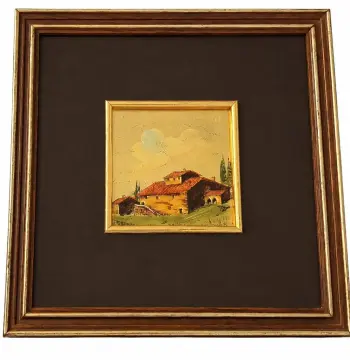
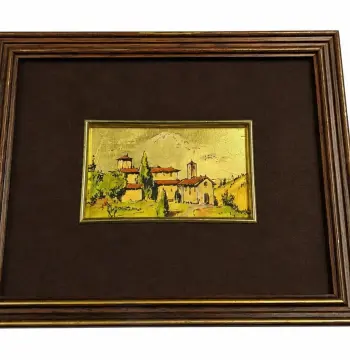
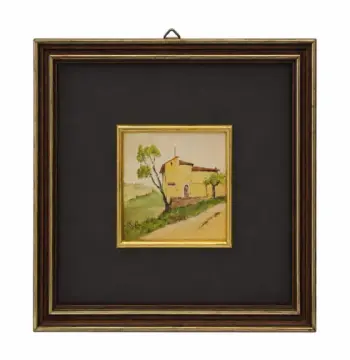
Fine Art Currently For Sale
Get an Instant, No-Obligation Offer
Send us photos via WhatsApp or book a home visit — our specialists travel to you anywhere in South Africa.