
We Buy
Jewelry
Gold, silver, diamond and designer jewelry — intact, broken, unpaired or simply unwanted, priced fairly on metal, stones and craftsmanship.
What Makes Jewelry Collectible
We buy jewelry in every state — solid or broken, matched or single, on-trend or decades out of fashion — because its worth comes from two separate pools of value that don't depend on the piece being wearable. Precious metal and gemstone content (the melt or remount value) is fixed by weight and purity regardless of condition, so a snapped chain or a lone earring is worth exactly as much in raw materials as an intact one. Meanwhile intact, well-made or branded pieces carry additional collectible or resale value on top of that floor, which is why we assess each item on its own merits rather than turning away anything that isn't in "shop" condition.
Makers & Items We Buy
Bangles/Bracelets
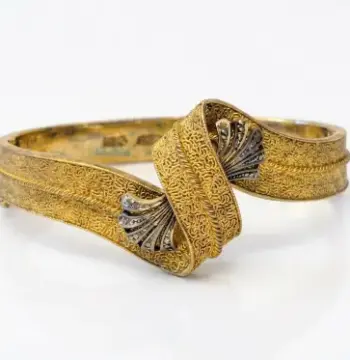
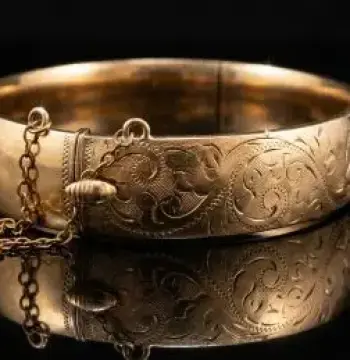
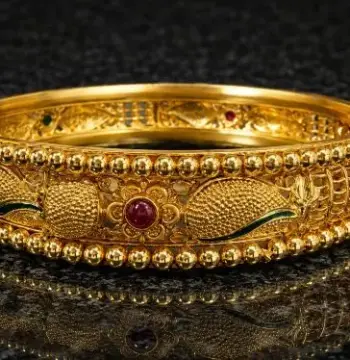
Bangles are rigid or hinged bands worn at the wrist, a form with roots stretching back to the Indus Valley civilisation and a long, continuous history across Indian, African and Middle Eastern jewelry traditions; bracelets cover the broader flexible-strand and linked-chain wrist styles that followed. Because bangles are often solid and substantial, they can carry significant bullion weight, making them attractive purely for metal content even when the design itself is plain or worn. We check the hallmark or test the metal to confirm gold or silver purity, weigh the piece, and inspect clasps, hinges and any set stones for wear or damage, since even a battered bangle retains its full material value.
Broken Chains & Rings
This category covers precious-metal pieces that are no longer wearable — snapped chain links, missing clasps, cracked or bent ring shanks — bought specifically because damage does not reduce their underlying value. We pay on gold or silver content, not condition, so a mangled chain is worth the same as an intact one of identical weight and purity once melted and refined. What matters at the counter is verifying genuine precious-metal content (rather than plate) through hallmarks and acid or electronic testing, and weighing the piece accurately, since cosmetic damage has no bearing on the payout.
Cufflinks
Cufflinks emerged in late-17th-century France as ornamental "boutons de manchette" replacing ribbon ties, were popularised by royalty including Charles II, and became a mass-market men's accessory after Krementz's industrial process in 1876 and the modern spring-back fastener patented in 1924. We distinguish solid gold or silver pairs from base-metal or gold-plated ones, check for maker's marks from recognised houses (Tiffany, Cartier, Dunhill and similar), and confirm the pair actually matches. Mechanism condition, enamel or gemstone work, and hallmark purity all factor into what's offered.
Designer Jewelry
Designer or "signed" jewelry is work bearing the maker's mark of a recognised house — Tiffany, Cartier, Bulgari, Chanel and comparable names — where craftsmanship, design pedigree and brand reputation add value well above the raw materials. Our first task is verifying the signature or hallmark is genuine, since designer pieces are heavily counterfeited, then assessing condition, completeness and whether original boxes or papers survive. Authenticated pieces are often worth pursuing as resalable collectibles rather than scrap, so they're evaluated differently from unbranded jewelry of similar metal content.
Diamond Jewelry
Diamonds are graded on the "4Cs" — cut, colour, clarity and carat weight — a standard developed by the GIA in the 1940s that remains the universal benchmark for quality and value, with cut generally regarded as having the greatest effect on brilliance. We examine the stone against these criteria, ideally against a certificate from a recognised lab such as GIA, alongside the quality and metal of the setting. Mounting condition, prong wear and whether the stone is loose or securely set all affect what's paid, in addition to the stone's own grade.
Gold Jewelry
Gold jewelry is graded by karat purity — 9ct (375, 37.5% pure), 18ct (750, 75% pure) and other standards up to 24ct — with South Africa following the British hallmarking convention of "ct" and numeric fineness stamps. Our core task is confirming purity through the hallmark and independent testing (acid or XRF), then weighing the item, since gold jewelry's baseline value is driven by metal content rather than style or age. Craftsmanship, gemstones and maker's marks can add value above the metal price, but even plain or damaged gold pieces are bought on weight and karat alone.
Pearls
Natural pearls form without human intervention when a mollusc coats an irritant in nacre over several years, making them genuinely rare; cultured pearls, pioneered commercially by Kokichi Mikimoto from the late 19th century, are produced by deliberately seeding the mollusc and are far more common and affordable today. We assess pearls against recognised value factors — lustre, surface cleanliness, shape, colour, size and, for strands, how well matched the pearls are — and determine whether a piece is natural (commanding a substantial premium) or cultured. Setting metal and clasp quality are also considered on mounted pieces.
Pendants
A pendant is any ornament suspended from a chain or cord, a format used since antiquity for amulets and personal tokens and later refined into Victorian mourning lockets, Art Nouveau figural designs and modern gemstone drops. We value a pendant primarily on its metal purity and any set gemstones or diamonds, independent of whether a matching chain is present, and check craftsmanship, hinge or bail condition, and stone security. Age and design style can add collectible interest on top of the base material value.
Rolled Gold
Rolled gold is made by mechanically bonding a layer of karat gold onto a base-metal core, usually brass or copper, a process patented by John Turner in 1817 and hugely popular through the Victorian era and again in the 1920s-30s as an affordable alternative to solid gold; pieces are typically marked "RG" or "RGP" and, unlike gold-filled items, contain less than 5% actual gold. Because the gold layer is thin, melt value is minimal, so we value rolled gold mainly for its age, design and collectability rather than bullion content. Condition matters more here than with solid gold, since the outer gold layer can wear through to reveal the base metal beneath.
Signet Rings
Signet rings trace back to Mesopotamian seals around 3500 BC, were mounted as rings by Egyptian pharaohs and officials to authenticate documents, adopted by the Greeks by the 6th century BCE, and became widespread among Roman citizens before being taken up by Renaissance merchants and tradesmen bearing personal crests or initials. We check gold or silver purity via hallmark, assess wear on the engraved face, and note whether the ring carries a personal crest or monogram, since a personalised engraving typically limits resale as wearable jewelry and pushes the piece toward scrap value. Any set stone, traditionally bloodstone or onyx, is also examined for quality and security.
Silver jewelry
Sterling silver — 92.5% pure silver alloyed with other metals for durability — has been a defined English standard since the 12th-13th century and was formally adopted more broadly from 1868, with pieces marked "925," "STERLING" or equivalent hallmarks; lower-purity marks (800) or "EPNS" indicate plate rather than solid silver. We check the hallmark or test purity, weigh the piece, and look for maker's marks that add collectible value. Tarnish is not treated as a defect since it cleans off, but wear, repairs and plating (versus solid silver) all affect the offer.
Unpaired Earings
Single earrings left over after a partner is lost are common, and because they can't be sold on as a pair, we value them primarily on their own metal and gemstone content rather than as a complete fashion item. Designer or well-made singles may still be worth pursuing for resale — sometimes remounted as a pendant or single stud, or held until a matching piece turns up — but most are assessed the same way as scrap: purity, weight and stone quality. As with broken chains, missing their counterpart does not diminish the intrinsic material value of the piece.
Unwanted Jewelry
This is a catch-all for pieces a seller no longer wants regardless of style, age or condition — outdated designs, ill-fitting rings, mismatched sets or sentimental items simply left unworn. We sort mixed lots piece by piece, testing metal purity, weighing gold and silver content, and assessing any gemstones on their own merits rather than judging the lot as a whole. Because value is assessed per item rather than by overall appeal, unfashionable or unloved jewelry is bought just as readily as anything else, split between scrap and resalable pieces as appropriate.
Get an Instant, No-Obligation Offer
Send us photos via WhatsApp or book a home visit — our specialists travel to you anywhere in South Africa.